Best Horror Movies You’ve Never Heard Of (or Maybe You Have, in Which Case, Shut Up)

•March 7, 2011 • 2 Comments

You may think in perusing this site that I watch far too much bad horror. In fact, I was beginning to think so myself. Bad horror is fun, but spending too much time with it can skew your perspective – all of a sudden, that movie about the people who turn into turkeys after smoking too much weed (and go on a subsequent human-eating munchie-spree) doesn’t seem so bad. Sidebar: that movie actually exists, BTW; it’s called Blood Freak (1972) and is hailed as “the world’s only Turkey-Monster-Anti-Drug-Pro-Jesus-Gore Film.”

But I digress, which proves my point. The hostage and I were getting bogged down in bad horror; we needed to switch things up. The problem is that, given our insatiable horror appetites, we’ve done A LOT of the good horror movies out there. We have to actively seek out alternative lists, some of which still start with Saw (2004) or The Ring (2002). After scouring the internet (and with the help of a few friends – shout out to Ashley!), we found a number of films worth a potential look. They weren’t all keepers, but we discovered a few really interesting gems. Some are more well-known than others, and apologies if you are a more avid fan who has already tracked these down. But for anyone looking for something different from the typical horror fare popular today (torture porn and remake overload here), these may be worth your time:

Lake Mungo (2008): Recently there have been a lot of horror mockumentaries released. I prefer this format to the found-footage style; it maintains the “it really happened!” vibe, but avoids the pitfalls, such as “why are these people still filming?” and “I think I’m going to be sick,” and “soooo…. how do we stretch this to 90 minutes?” Lake Mungo is an Australian horror mockumentary that never quite knows what it wants to be; is it a thriller? A mystery? A ghost story? It’s kind of all of these things. A young woman is found accidentally drowned and her grieving family begins to realize strange happenings are afoot (pretty standard fare, really). While it may not work in its entirety, it is interesting and engaging, with some seriously creepy imagery.
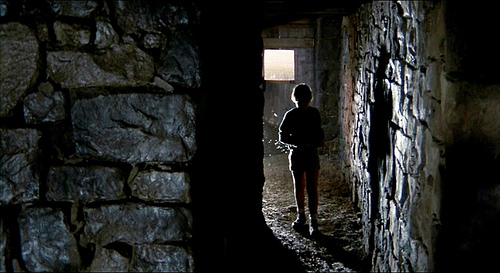


The Other (1972): Twin boys grow up on a small farm; Niles learns to play “the game” (derived from a family-shared supernatural ability) from his grandmother while trying to control his possibly evil brother, Holland. The Other is a patient, unsettling film. Unique to the genre (and to its credit), it mostly takes place during the day, but manages to maintain a sinister feel. And thank the cinema gods for children who can act! The young twins are excellent; Holland manages menacing with barely more than a sneer, while Niles’ fear and desperation to be wrong about his brother is palpable. Not your traditional horror film, The Other plays on a more psychological level, and does so effectively.
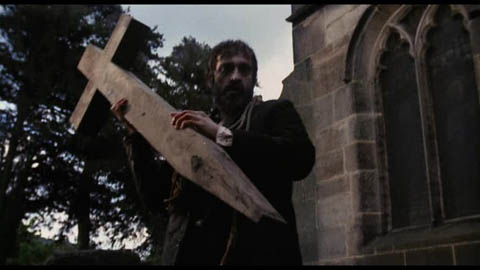


Let Sleeping Corpses Lie (1974): Britain’s response to Night of the Living Dead (1968), Let Sleeping Corpses Lie is a tense zombie flick with underlying themes of bigotry and environmental exploitation (what is it about zombie movies that makes them so ripe for social commentary?). Two hippies are pursued across the English countryside by the police for murder; little do the police understand, the real murderers are already dead! Very dissimilar from the Romero (and all subsequent Romero-inspired zombie movies), in that the zombies do not signal the apocalypse. Instead we get a new slant on the idea – what if we not only had to fight the zombies, but also ourselves? It loses some of the impact this way; for me, the most terrifying thing about zombies has always been that it doesn’t matter how slow they are or how fast you are, or where you hide or how you escape – they will get you in the end, because there’s just too many of them. Yet the idea of the human monster is an interesting one (which pops up again in 28 Days Later) – a problem with a less clear-cut solution than is typical for zombie movies. A more polished film than Night of the Living Dead, it may not quite live up to the originality of Romero’s vision. However, it is a tight film with exceptional gore effects, and captures the sociopolitical climate of the time well.
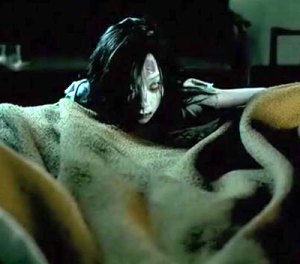
 

Shutter (2004): NOT the crappy American remake, but the original Thai version. With the J-horror influx that followed the success of The Ring and The Grudge (2004), the creepy, long-haired Asian girl turned into a tired cliché. Sometimes it’s hard to remember that the reason she became so ubiquitous was because, when done well, she can be freaking terrifying. Shutter works this angle very well, creating a narratively cohesive and well-constructed story with great visual impact. A young man and his girlfriend hit a person while driving home from a wedding, and the man insists they drive off without checking the injured woman. Soon, it seems that they are not as alone as they thought, although the storyline is far from that straightforward. Very creepy; the final, haunting image is sure to send shivers down your spine.*
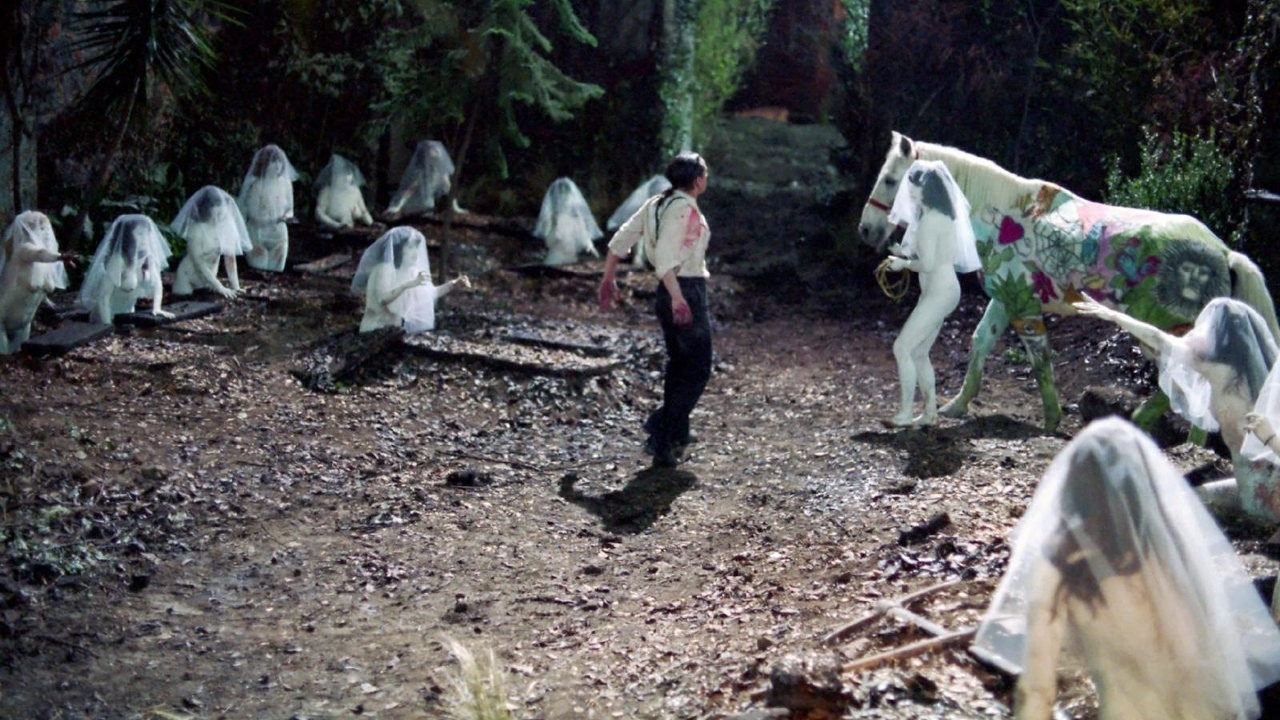

Santa Sangre (1989): People will either find this film a compelling experience or a hot mess – or maybe a little from column A, a little from column B. Reviews describe it as “fascinating”, “ridiculous”, “pretentious”, “strange”, “unforgettable”, “surreal”, “gorgeous”, and “nighmarish”, often in the same sentence. It is a cinematic experiment that doesn’t completely work, but is riveting to watch unfold. The director, Alejandro Jordorosky, is considered a bit of an auteur in some circles, and the man undeniably has a vision. This outing is obviously influenced by a myriad of sources, but mostly it felt like Santa Sangre would have been the result if Fellini had directed Freaks (1932). The story revolves around a man and his mother who travel in a circus. The mother has her arms brutally severed, and her son becomes her arms for all endeavors – including murder. I’ll admit that it is certainly pretentious at times, but it also showed me visions/ideas I have never seen before; perhaps when pushing the boundary so habitually, Jordorosky is bound to step over the line a few times.  I’m not sure I’m convinced it’s as deep as it thinks it is, but it stayed with me long after the movie had ended.
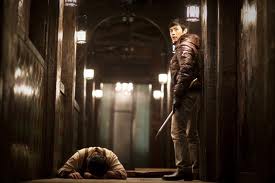

I Saw the Devil (2010): It had been a long time since I had seen a great serial killer thriller, along the lines of Seven (1995), The Silence of the Lambs (1991), and Copycat (1995). (Ok, maybe Copycat is just a personal fave.) Turns out, I just had to go to Korea, where Jee-woon Kim is getting down with his horror self. I saw A Tale of Two Sisters (2003) a few years back, and was greatly impressed with the quiet little ghost story. I had no idea what a drastic departure I Saw the Devil would be from his previous work. A policeman’s wife is murdered by a serial killer, and the man swears vengeance. Violent, epic, complicated, and disturbing, I Saw the Devil is a tense thriller; running close to two and a half hours, it somehow maintained a taut storyline as the game played between hunter and hunted takes turns neither of them expects. Beyond a simple revenge flick, Kim takes the time to explore the idea of revenge; what we give up for it, what it does to us, and what we ultimately get out of it. Highly recommended, although the faint of heart be warned; the violence is not glamourized or stylized in any way, and can be very disturbing (although it isn’t gratuitous either).

Well there it is; hope you were able to find one or two that piqued your interest. Until the next time,

K

*not guaranteed

An afterthought. . . . . .

•March 2, 2011 • 4 Comments

I’m sorry for tacking this on, but we have a friend in Madison right now. I don’t play politics in another nation, but big ups to everyone defending their right to bargain. Apologies if your views are different, but the oil companies would rape us even worse if we couldn’t bargain in my industry, so I can understand their conviction.

Cheers

History of the World Part 1: So good, something must be up. . . .

•March 2, 2011 • Leave a Comment

Good day all,

I have to open with a cautionary tale. I mentioned in one of the earlier reviews that I was concerned about Stockholm Syndrome setting in. Now I know that I have not given in the the lady’s psychological hooba-joob, but I’m worried that I’m getting paranoid instead. It makes sense that my mind is getting squishy (clinical term) and my madness comes with a friendly face. First the lady shows me the Aussie exploitation thing (awesome), followed up by a few of said Aussie exploitation movies (she wrote on Razorback, but we also saw Next of Kin, both terribly awesome) and now she comes home to the bunker (I’m pretty sure I’m underground) with History of the World Part 1; my grandma used to say if it’s too good to be true I already conned you (Grandma drank). It hasn ‘t turned owlie yet, but I think she’s planning some sort of Tet offensive in the psychological battle. I’ll keep you all posted, when I can get word out to you.

I’m glad that’s out of the way so we can talk about this beauty of a gem. I’m a little bit torn as I try to put my finger about what I love and hate about this movie. This film holds a special place in my heart as I saw this with one of my older cousins and had a great conversation with my mom about it; the look on her face explaining what a eunich was and why he got in trouble for getting an erection when they called in the slave girl to dance (I think I was 8 or 9).  On the other side of the scale is the fact that I feel pretty bad saying out loud, but, as a true fan and with all respect, Mel Brooks is not in my top order of comics (Gasp). Young Frankenstein, booyah, The Producers, anyone that creates “Springtime for Hitler” deserves props, and Blazing Sadles set the civil rights movement back 10 years in the most awesome way possible (respect to Mr. Chappelle), but all of his stuff has some downright bad moments. I feel like I’m pulling the plug on my Uncle Louie to say it, but his misses miss. Don’t get me wrong, all of Mr. Brook’s films (except the one with Kevin Costner and Dane Cook) have some brilliant comedy. I never realized how harshly spot-on the Spanish Inquisition is, and the lyrics to that song blew my mind. He sums up mass torture and genocide in a tune that had me dancing (until “she” yanked the chain). It’s better than most comedy you’ll ever see, but it doesn’t quite reach the peak of  the Marx’, Keaton (not Michael), Python and Farrel. Regardless, it was great to walk down memory lane with an old friend.

The other thing that always grabs me when I watch this movie again is how much of high school history was passed by referring back to this film. While you can’t directly quote the lighting of a giant joint to distract Roman soldiers to explain the excesses of the Roman Empire, but I honestly remember humming the French Revolution song during a high school exam to remember whether it was the 14th or the 16th Louis (for the record, they were all in-bred, just sayin’). I remember being excited that the Jewish race (race, faith? apologies to all my Hebros) would never be threatened and survive to colonize space. Here I am bad-mouthing old Mel and he helped me understand the subtle tapestry of history, though I recall losing marks from my history paper for explaining the dance Tourquemada did.

Before I forget the most important aspect of every film is the quality and clothedness of the ladies. As always, Mel Brooks tiptoes the line of suggestion and outright dirtiness perfectly. There are a ton of chicks running around in suggestive clothing from different eras that never totally gear down, which is not dirty, but then Mel gooses one and gives you a look dirtier than if she was standing there naked. It almost like he gets the dirty joke  out there without ever telling it, and somehow it’s dirtier. I have never been the king, but when he looks and says “it’s good to be tha king” I think “yeah, I’m down”; then I pause and remember that Louis, like, raped all of the servant women he wanted (see I learned that historical tidbit that from a Disney made Musketeer movie), and don’t think I would be able to be the king (I’m principled in my anti-rape conviction) and end up feeling dirtier. Tricky Mel.

Well, I think that’s my time all, as I have to go through my routine of checking all the exits for some thing to pry at and listening for clues to where she got me stashed. I’m a little worried that this run of good movies means she’s lost interest and is going to kill me, or if I should prepare for a run of horrible, artsy shit and she’s just being nice to drive the cruelty home later. One way I’m dead, the the other, maybe worse. Not to end on  a sad note go watch this flick, and Life of Brian too.

Until I find that bright side of life I keep hearing about, cheers,

The Hostage

History of the World, Part 1 (1981): It’s Nuts! N-V-T-S, Nuts!

•February 28, 2011 • Leave a Comment

With Mel Brooks, I typically find that you take the bad with the good. For every Young Frankenstein (1974), there’s Dracula, Dead and Loving It (1995). Some films I once thought classics, such as Spaceballs (1987) and Blazing Saddles (1974), do not hold up that well on recent viewings. There are moments of genius in each movie, but also moments of truly low-brow and inane humour: Bart holding himself hostage to fool the townsfolk – genius; repeated jokes about the size of Bart’s penis (he is black, after all) – yawn. It’s like watching Robin Williams do stand up – he throws so many jokes at you, some are bound to stick and some are bound to stink. But, as Groucho so helpfully informs us, “Well, all the jokes can’t be good. You’ve got to expect that once in a while.” Spoken like a man who worked the vaudeville circuit.

Synopsis: Mel Brooks and a cavalcade of comic legends present a brief telling of the world’s most influential eras, covering the dawn of man, the Old Testament, the Roman Empire, the Spanish Inquisition, and the French Revolution (amongst others) in truly ridiculous form.

In traditional Brooks style, History of the World: Part 1 (1981) has highs and lows. In general, I’m not a fan of toilet humour – I find that kind of comedy to be kind of lazy (it’s a cheap laugh). And unfortunately, Brooks will often go toilet. Maybe this is partly a gender thing, but masturbating manimals is just not all that funny in my mind. Although I am also not the gal who endlessly forwards people videos of chimps smelling their butts, or peeing into their mouths. Maybe Brooks is that type of person, and he genuinely finds this stuff to be comedy gold – he knows his audience better than I do (as the box office has shown). All I know is that the jokes related to bodily fluids and sex are the weak link in Brooks’ films to me.

Maybe I feel this way because such jokes seem like shameless pandering. As does the continuous hiring of female actors based on their ability to wear a sweater rather than deliver a line. I have no problem with a pretty lady in a comedy, unless she has been hired strictly to be a pretty lady. Marion, the vestal virgin Comicus (played by Brooks) drools over, was clearly hired for her perky assets as opposed to her comedic timing. She can’t even fill the role of the straight man; the description of her character must have simply read “boobs.” And I find it extra-skeezy that Brooks always hires beautiful young women to play the romantic interest opposite his increasingly skeletal form. To be fair though, I’m starting to think Brooks emerged from the womb looking like a 45-year old drug addict. Yikes! So perhaps his leads aren’t always so much younger than he is, they just look it because the man has had wrinkles and ear hair since age 3.

More an issue than the fart and poop jokes, and certainly more an issue than pretty, talentless starlets (let’s face it, who isn’t used to that by now?), is how recycled some of the jokes feel. At one point, Gregory Hines’ character slips on a banana peel. I have a hard time believing that was fresh in Vaudevillian times, let along the 80s. Another groaner (and this coming from someone who is defiantly pro-pun), is the “walk this way” joke – cue Brooks and co. following the slave while copying his strange gait. The first time I saw this gag was in a Tex Avery cartoon from the 1940s. It’s all in the execution, of course, but Brooks doesn’t do anything new with it. Again, kind of lazy.

BUT…

The highs in the case of the History of the World do outweigh the lows. The majority of the cast is incredible. To contrast my complaint about most of the female characters, Brooks tosses the feminists like me Madeline Kahn, the perfect combination of sexpot and comedienne. She sparkled like she always does… breasts AND comedic timing?! “It’s twue, it’s twue!” Dom DeLuise is almost having too much fun as Nero – belching, scratching, spitting, and entirely bored with his duties. He is completely disinterested in all reigning matters, but becomes excited like a 8-year-old girl when taking his “treasure bath.” His brief performance is worth the watch alone.

To add to that, many of the skits were absolutely hilarious. Brooks as a clumsy Moses, who accidentally breaks one tablets of God’s original 15 Commandments, was a highlight. Any wagers as to what the unknown commandments were? I’m going with “Thou shalt not talk at the theatre” and “Thou shalt not worship useless people for being rich and stupid in public” (man, that last one would have been good to have down in stone). Also watch for the marijuana-induced swing dancing party of Roman soldiers, the Spanish Inquisition Broadway number (“better to lose your skullcap than your skull!”), and Brooks as King Louie the XVI playing chess with real people.

As a final note, RIP Harvey Korman. Talk about an underrated performer. His French noble is perfectly arrogant and clueless, and precisely as “dandy” as one would expect. The comedy world is duller for having lost this great comedian.

So overall verdict: as usual for Brooks, there are moments of hilarity and moments that will make your eyes roll, but the hilarity > (or at least =)  eye-rollingness. If such absurd humour is in your wheelhouse, Brooks delivers the goods. I wish he hadn’t been joking and had made History of the World: Part 2, if only to see the majesty of Hitler on Ice!

Favourite Scene: Nero’s game show gift reception – DeLuise makes the most of every second he is on-screen.

Key Quote: During the segment on the French Revolution – “We are so poor, we do not even have a language! Just this stupid accent!” (to which another revolutionary replies, “She’s right, she’s right! We all talk like Maurice Chevalier!”)

Fun Fact: Richard Pryor was scheduled to play the Gregory Hines role, but set himself on fire while free-basing cocaine before production was to start. Hines was called in for his film début.

K

Razorback (1984): We’re Gonna Need a Bigger Sty…

•February 20, 2011 • Leave a Comment

After watching Not Quite Hollywood (2008), the hostage and I were ready to view some Ozploitation, if only to see how crazy/crappy such films could be. Where better to start than Russell Mulcahy’s wild-boar-on-a-rampage thriller, Razorback (1984)? Especially after it prompted one of my favourite movie review lines ever, from Videohound: “Firmly establishes that pigs, with little sense of natural timing, make lousy movie villains.”

Synopsis: A Canadian (whoop whoop!) travels to the Australian outback to discover the truth about what happened to his missing journalist wife, joining a hunter and his sexy apprentice as they attempt to bring down the beast allegedly responsible.

“From the director of Highlander.” That bodes well, right? You know how some directors can rise to a challenge, with the resulting work perhaps even exceeding original expectations? My favourite film story of this kind would be Bruce the Shark on Jaws (1975). For anyone not familiar, Steven Spielberg had initially planned on featuring the shark much more prominently than he did; when the mechanical shark (nicknamed Bruce by Spielberg and co.) arrived on set, it was so clunky that Spielberg was forced to use it sparingly, instead relying on building an atmosphere of suspense and allowing the audience mere glimpses of the monster. The results garnered comparisons to Hitchcock – and it was really just a fluke.

Well unfortunately, Mulcahy is no Spielberg. In a number of ways. You see, sharks are very scary, and giant sharks are *extremely* scary. The same is not true of pigs. This beast is a giant pig. Seriously giant. Think rhino sized. One of the filmmakers in Not Quite Hollywood chuckled in recollection at the planning session in which the boar’s size grew wildly out of control. At the time, he remembers they genuinely believed bigger was scarier. It turns out that when it comes to pigs, bigger is more ridiculous.

This decision created probably the biggest obstacle to the film’s success: the giant mechanical pig (shall we call him Lenny?). This movie did not have the budget to afford a credible robot pig (yet to be invented), so Mulcahy was forced to try to find clever ways to hide the fact that his villain was an absurdly large, pig-shaped piece of junk. In the Australian outback, to boot. Another advantage: Spielberg. The sheer size of the shadow Bruce cast below the water was effective in inducing terror in viewers; there are lots of ways to obscure such a beast in the ocean. But where to hide a rhino in the desert? Mulcahy relied on quick cuts of Lenny running behind buildings, and being swarmed by regular-sized pig minions, whom Lenny commands to do his bidding. While our hero cowers atop a windmill tower, Lenny sends his pig minions to dismantle the tower (“Bring him to me…” is how I imagine Lenny would have bid them. Then he’d laugh maniacally). Such techniques are hardly Hitchcockian, and you can imagine how effective the results were.

Mulcahy is trying his best with a ridiculous premise, no budget, bad actors, and a stupid script. At one point, I think he abandoned all hope that this film would be any good, and just focused on the visuals. There is some stunning visual imagery, that is often completely irrelevant to what is happening in the story. Oooh, a rainbow… sky? Um, okay. But who can blame him? I credit him for not running from the set, pulling his hair out and wailing like an Italian widow.

Does it sound like I hated it? Cause I really loved it. It definitely falls in the so-bad-it’s-hilarious camp, and I do so love to visit that place. But Razorback should probably be avoided by anyone with a shred of taste.

Favourite Scene: When our hero taunts Lenny into making a critical mistake. This is a cognizant pig, people.

Key Quote: “It’s only got two states of being…. dangerous or dead”

Fun Fact: The full-sized, fully animatronic model razorback, which was built at a cost of $250,000, is seen for only one second.

Till next time,

K