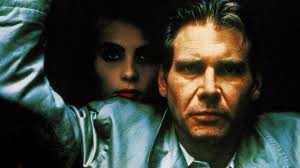
He Returns Happily Defeated: The Good, The Bad and the Ugly/Weird

•August 27, 2011 • Leave a Comment

Good day all,

It has been far too long since I last had the chance to give you a sensible opinion on the bunker viewing and it is wonderful to be back. Regular Bat-viewers will remember that I had decided that being forced to watch movies for the next seventy years in a bunker wasn’t the life-plan I had in mind and made a run for it, only to discover that she had established said bunker in the middle of the Taiga Forest. She let me have one post, simply to let you all know I had been slapped in the face by the hopelessness of the situation, and then silenced my voice for a month or two (I think). You see, there was a certain “reprogramming” session; think Alex in  A Clockwork Orange, but replace rape footage and Nazi propaganda with Ang Lee films and Sophia Coppola movies to break me down. Long story short we came to an agreement: I would accept my fate with good humour and she would make our adventures less about torturing me with “great” cinema. Don’t get me wrong, a lot of the high film we’ve discussed here was great as visual art, but not so much for being entertaining or being paced quicker than a snail with his nuts caught on a bush (there was an expansion of low-brow analogies in the agreement as well). Essentially I got the best deal I could and have come to terms with it and the lady, in her defense, didn’t bend me over and give me the Father O’Mally either (that low-brow clause is a beauty). Let’s do this thing!

The topic of today’s jaunt is based on a conversation the lady and I had in the negotiating process about Tarantino. We are both huge fans of his films but questioned how he would be remembered and what his long-term reputation would be. He has all the makings of an auteur: distinct visual style, complex and innovative dialogue, spectacular use of music and the ability to coax spectacular performances out of actors of all quality levels (looking at you there Travolta). The problem is that every one of his movies is a nod to a genre of film he loves and not much more than an innovative homage. Essentially, we came to the conclusion that we aren’t bothered by his finding a starting point that already exists, I mean Kurosawa did samurai versions of Shakespeare and they rock balls, but that the establishment would never see him at the level of Hitchcock, Wells or even Spielberg as an all-time Hollywood great. Now in a time when “new” ideas are running a little thin in the movies and we have been absolutely bombarded by shitty American remakes of good Asian movies,  good (and shitty) 80s flicks and more comic book characters than you can shake a stick at I understand the urge to call the guy derivative or suggest he just dresses up what’s been done before. I disagree with this but understand it. So to convince all of you, dear readers, I will give you the best example I have of why twisting an existing great is awesome when talented writers and directors are involved.

This story starts with a fella named Sergio Leone that was a fan of the great Japanese director Akira Kurosawa and based his first hit film, A Fistfull of Dollars, on Kurosawa’s Yojimbo. A lot of you our there are grinding you’re teeth and salivating at the thought of blasting this obvious point right now but shut up, not everyone is as smart as you. Anyway, the company that owned Yojimbo sued Leone and lost, mainly because Yojimbo was based on an awesome Dashiell Hammett novel called Red Harvest. You see where I’m going here. The overlap that is most important, for me, is that Leone seems to see a similarity between the badass cowboy of the old West and Ronin; both are trained in deadly arts and succeed because of their will and extraordinary talent in killing, both are carving out a living in a shrinking world where civilization makes them obsolete and both can range from men of the highest honour to sadists that kill and rape simply because they can. My favourite Leone movie, like most, is The Good, The Bad and the Ugly and it take the ronin/samurai connection further. The three titular men all excel in what they do, but do it with very different codes. I see these as the types of men that do well in this shrinking, lawless world. The good is a man that can only be called good in comparison to the others. He cheats the civilized people, kills when it fits his needs and is just as greedy as the “bad” guys (but he won’t leave you hanging there without shooting the rope, eventually). The bad is the most successful of the evil men that make their money by killing. He claims to have a code but doesn’t, in fact hiring the guy to kill someone for you is pretty much signing your own death warrant because he will fuck you over and smile as he shoots you (and probably some family and friends too). The ugly just can’t be killed. A talented killer, but dumb as a stump and, much like the mighty cockroach or sewer rat, will be thriving long after humanity is dust. They are the model, and they are all pitted against one another for a huge score. I’m not sure if the treasure is just a bragging rights, or if these guys see that they are becoming extinct in a modernizing world. Hard to say, but it’s about as flawless as Western has ever been done (Wild Bunch maybe) from the music, performances and incredible camera work.

The next part of our little meta-adventure involves a Korean cat named Jee-woon Kim. For those of you that missed the lady’s post on these two he is a very talented director from South Korea and is quickly becoming one of my favourites. The lady ran down I Saw the Devil and A Tale of Two Sisters so I won’t go too far, but this guys has chops. His writing is spectacular, he is in complete control of the camera and he can create the perfect atmosphere to fit his genre; Sisters is an incredibly creepy ghost story with a more sparse camera, Devil jumps between wild violence and crushing suspense smoothly and The Good, The Bad and the Weird has an epic style with the type of stylized action you see in good comic book movies. His eye is present in all three, but only in the way A Hard Day’s Night and Abbey Road are both Beatles’ albums.

In getting to the actual movie, the only flaw is that it is a retelling of a near perfect film. There are specific scenes and sequences taken right out of the original, with only tiny changes keeping them from being a Van Sant/Hitchcock mess. In a few instances I actually liked Kim’s style more. The guy playing the Bad is spot on, moving back and forth between serious and brooding in the quiet times and smiling like a child as violence starts to erupt. Like Angel Eyes he mentions a code and having a job to complete, but it’s clearly just a cover for his genuine enjoyment of killing. Even his styling is almost anachronistic; like you took a modern, Korean gang member and dropped him in the Asian frontier. Likewise the Weird is pulled off wonderfully. This guy is clearly, for Kim, like Mifune was for Kurosawa; the go-to actor that can play anything. His performance as the killer in Devil is brilliant in a completely disturbing way, and this performance is of equal quality in a goofy way. The Weird captures the spirit of Tuco, but takes it in a different direction than Wallach and Leone did. You perpetually have the feeling that there must be more to the guy, that there’s a grand brain to match the killing skill and he’s just playing dumb; the truth is that he is simply nature’s greatest adaptation in the survival of the fittest, the creature that will survive on sheer will. You’ll be sure you have him beat and he’ll find a way to survive, like Tuco, but there is no evidence of the thinking ahead and scheming Tuco showed. That leaves the Good. The truth is the guy is too good. He’s a great killer, he’s badass with rifle or pistol and he is more than able to keep up with the other two, but he seems to have too much honour. Blondie was only good in comparison and, if it came down to survival, he would do whatever it took good or bad. I think we are supposed to see him as a sketchy bounty hunter, but he really feels more like a lawman. He smiles a fair bit, and not Clint’s sardonic “I’ll fuck you over” smile, like he’s actually happy. I don’t mean to badmouth the actor, and it’s a minor criticism, but he just doesn’t do the job as well as the other two.

Simply put friends, you need to see these movies if you haven’t. Also, if you are a die-hard fan of the original you will love the re-imagining even if it can never be perfect. There’s an old saying that goes “talent borrows, genius steals”, hell even Einstein and Newton stood on the shoulders of giants, so I think we need to stop assuming that anything nodding to something that’s been done is automatically bad. Pulp Fiction may just be another pulp/exploitation story, but it’s told in such an innovative way that it becomes larger and more signifigant that the genre originally being paid tribute (see every movie that breaks up the narrative and plays with time since). Kill Bill may just be another revenge flick, but both have sequences, specifically the 88s in part one and the grave/training sequence in part two, that are as good as any kung-fu flick or Spaghetti Western you’ll see. Reboots and remakes of foreign flicks aren’t evil, they are just evil in the hands of the same studio hacks that ran out of ideas in the first place (hello Michael Bay and Platishit Dunes).

Until the next time, which will be much sooner than the last time, keep your head up and eyes open, because you might end up loving a bizarre twist on something you love now,


The Hostage


P.S. As a Canadian and a dirty Socialist I would like to give a shout-out to Jack Leyton. For you non-Canucks, he was the leader of our NDP party (our larger, left-leaning party) and passed away recently after a long battle with cancer. He, like all politicians, claimed to have the best interests of the middle and working classes at heart but, differently from other politicians, actually put forward suggestions and legislation to back that claim up (looking at you Harper, and like-thinking, American GOP [and most Dem] politicians). He was a good man in a dirty business and my thoughts go out to his family. Let’s keep he and what he stood for in mind in upcoming elections.

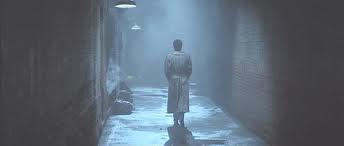
The Good, the Bad, the Weird (2008): An Insane Homage to the Classic Western

•August 26, 2011 • Leave a Comment

Jee-woon Kim is rapidly becoming one of my favourite filmmakers. In A Tale of Two Sisters (2003), he demonstrated that he could infuse a quiet ghost story with eerie emotion, leading to a horror film that was as emotionally satisfying as it was visually effective. He proved with I Saw the Devil (2010) that he could put forth a violent and epic tale of revenge that does not shy away from what inflicting vengeance does to us as people. And with The Good, the Bad, the Weird (2008), he deftly displays his skill with action and comedy, as he takes on one of the most iconic Western films ever made.

Synopsis: Yoon Tae-goo (aka the Weird) steals a map during a train heist, unknowingly bringing down upon him all who want it for themselves (knowing that it leads to treasure). Tae-goo joins forces (kind of) with Park Do-won (the Good) to reach the treasure while Park Chang-yi (the Bad) leads the pursuit to track them down.

I was unsure how to label this cinematic endeavor: it’s too different to be a remake of The Good, The Bad, and the Ugly (1966), too similar to be an homage… perhaps a re-imagining? The core goal of the three main characters is the same, some scenes are clearly taken from the original (although always slightly altered), and the relationship between Do-won and Tae-goo is very similar to the congenial yet adversarial dynamic between Tucco and Blondie. But Kim has changed some elements entirely: Tae-goo and Chang-yi share a past which is not fully elucidated until the end; the treasure is found via map, as opposed to the gravestone (which always did a wonderful job of accounting for why Blondie and Tucco would put up with each other, an explanation not so believable in Kim’s version); and the film is set amidst the backdrop of the Japanese occupation of Korea circa WWII. Acquiring the map is central to both the rebel and Japanese forces as each sees the treasure as guaranteeing their victory. Although let’s be clear, I wouldn’t cite this film for historical accuracy.

Historically accurate or not, I don’t really care. The Good, The Bad, The Weird is certainly style over substance, with visual flair and stupendous action sequences. And what style! Kim is a director who really thinks about the camera, and how he can use it in innovative ways: long tracking shots, sweeping aerials… the complete opposite of the neo-realism style popular today (another style I enjoy), Kim wants you to know that he is in control of this story. Several times he pans out from a scene to reveal a clever twist on the action you thought was unfolding. And he understands the fundamental requirement of all action movies – you must be able to tell what is going on. Lately, there is a trend toward shaky-cam action sequences. Beyond inducing nausea in those sensitive to the motion (thankfully, not a problem I have), this style of filming tends to be excessively edited to the point that the action itself is muddled. Ok, I know that Guy A ran at Guy B and then something violent happened and now Guy B is on the floor. Kim is as creative with his action scenes as he is with the rest of the film, but the action unfolding is always clear. And crazy over-the-top.

Also impressive is the steady humorous thread running through the movie. Neither of the previous Kim films I’ve seen showed even a shred of humour. Not that either flick lacks because of it – it’s just that the subject matter in both cases is serious as a serial killer slaughtering your wife (for example). Yet The Good, the Bad, the Weird is infused with hilarious moments, and a solid tongue-in-cheek even in the more dramatic scenes. An especial kudos to Kang-ho Song who plays the Weird in a fine comedic performance. Which is especially impressive when I consider that I last saw him in I Saw the Devil, in which he plays a chilling serial killer.

There is only one significant weakness when compared with the original (there are other ways in which The Good, the Bad, the Weird is inferior in plot or character, but just slightly and it didn’t detract from my overall enjoyment of the film). Unfortunately Park Do-won is no Blondie. And I understand that Woo-sung Jung (the actor behind the Good) is competing with Clint Eastwood, and those are some big shoes. But the character is just… bland, especially when compared with Chang-yi and Tae-goo. The real kick about Blondie is that “good” as a descriptor for him is in very sarcastic quotation marks. He’s only good when compared with the other weasels in the movie – and he’s certainly not above stabbing an accomplice in the back and leaving him to die in the desert. Do-won is good in the more traditional sense, and it’s too boring for this flick. His contributions to the action sequences, however, are excellent.

The Good, the Bad, the Weird was easily one of my favourite action movies of the past decade. Add to that list a favourite horror and thriller, and colour me eager for Kim’s next release.

Favourite scene: Oooh, so many… I have to go with the opening train heist. A fantastic introduction to our anti-heroes.

Key Quote: Man-gil: The bounty on your head is 300 won.
                       Yoon Tae-goo: What? I’m only worth a piano?
                       Man-gil: A used one at that.


Fun Fact:
Kim refers to his film as a “Kimchee Western” for the Korean people. He says he thinks the plot and movie are spicy and vibrant, like the Korean culture.

Fright Night (1985): Sacrilege, but I Support a Remake Here

•August 9, 2011 • 1 Comment

I’ve held the view most of my life that remakes are generally a bad, bad, shameful idea. Recently, I’ve revised this opinion. I’m not anti-remake, I’m anti-remake for excellent, classic movies. Psycho (1960)? Really, Gus Van Sant, you think you can improve? No, you don’t, so now your plan is to shoot the entire movie, shot for shot, in colour and with an inferior cast? Stellar plan. I can’t see why that movie would suck at all.

I understand the rationale: cash in on the name and fame of the original. Typically, this means the studio is happy to coast along on pre-established hype, and hand the creative reins to the screenwriter who wrote one episode of CSI: Miami and the director of Keisha’s latest pop hit music video. Hence the almost always sucking. Besides, this leaves the remake open to comparison with the original, which is nearly universally a classic and long beloved film (hey, Nightmare on Elm Street (1984) was incredibly influential to some of us).

But just think of the slew of crappy movies out there – films with potential, films with interesting concepts and clever ideas but just shitty execution. It’s a freaking goldmine people! Give these ideas the treatment they deserve. Besides, there’s nowhere to go but up! OK, that’s not true. If studios keep hiring talentless hacks to churn out the next hit quickly, I have no doubt that Hollywood could find a way to make a bad thing worse. But the potential to make a better film than the original is exponentially improved.

It feels a bit blasphemous as a horror fan to admit that I’ve never loved the original Fright Night (1985), directed by Tom Holland. I saw it once as a youth after hearing rave reviews, and was left with the feeling of… *shrug*. I didn’t hate it, but it wasn’t making its way into my regular rotation. Then again, I didn’t always have the best taste as a kid. I watched Full House and thought The Shining (1980), apart from the terrifying girls, was boring (give your head a shake, little K!). Was my initial reaction to Fright Night unfair? Was it better than I remembered? In anticipation for the remake, the hostage and I decided to revisit the original.

Synopsis: A man moves in next to a teenage boy and his single mother. The boy suspects their new neighbour of being a vampire, and enlists the help of his friends and a local TV vampire hunter to prove him right and take down the monster.

There are some moments of potential brilliance in this movie. The boy, named Charley, has good reason to suspect what he does. After all, his new neighbour Jerry likes to bite with the curtains open. An exhibitionist, or just confident in the fact that people would likely not even believe their own eyes when it comes to the supernatural? Probably a little of both. Obviously, there is a strong tie between vampire stories and repressed sexuality; the beast unleashes within us the desires which are otherwise deemed so unsavoury by society. In Fright Night, the sexual frustrations of this deprived teen (putting in his time with his sweet, yet sexually timid, high school girlfriend) are in stark contrast to what he sees through his neighbour’s window: a man in complete control of his sexuality and never without a bevy of beautiful (and then strangely missing) women anxious to please him. Charley’s conclusion: he must have some sort of power over them!

Fright Night does not shy away from these contentious themes of sexual power and control, as many teen movies do (particularly teen vampire tales – Twilight, I’m looking at you). There seems a discomfort in Hollywood with portraying teenagers as sexual people, as though to acknowledge it aloud will immediately result in a dramatic increase in teenage pregnancy. It’s ok to portray them as wanting sex, but only the boys really. The girls should all be disinterested, or maybe a little afraid. Or slutty, and then hacked into pieces by a slasher (there are rules to these things, ya know). Thankfully, Fright Night embraces wholeheartedly the sexual overtones of vampiric lore, most evident in the sexual awakening of Amy, Charley’s gal. Shy, almost frightened in her amorous encounters with Charley (who is, let’s face it, about as threatening as a kitten armed with a marshmallow), she becomes a confident, sexually expressive woman when faced with Jerry, who poses a genuine threat. Of course, in the film she is under his thrall, we are meant to imagine, yet this does not distract from the remarkable transformation she undergoes as a sexual being.

There are also scenes in Fright Night with the makings of great comedy and/or horror. For instance, about mid-way through, Charley has made his fears regarding Jerry known to several close friends and has requested the help of Peter Vincent, a long-standing television vampire hunter. Neither Vincent nor Charley’s friends believe him, but want to ease his mind, so they call Jerry and arrange with him an anti-vamp test to clear him in front of Charley. There is so much that could be done here! So many clever tricks and double-entendre based dialogue opportunities lost! The scene comes across as half-baked; there isn’t anything overly original or interesting there at all. Despite the clever premise, the potentially great scenes, and the frank sexual exploration, Fright Night is a failure of execution.

Let’s start with Jerry, the incredibly terrifying/hunkalicious vampire. For starters, I may be a bit biased. Jerry is played by Chris Sarandon, who was a big star at the time. Yet alas, I grew up obsessively watching The Princess Bride (1987), and cannot see him as anyone but Prince Humperdink. There. The name alone assures that he can never be taken seriously in any role. If there were a chance Sarandon could have scared (or seduced) me, it was gone after I saw The Princess Bride because Humperdink (apart from the name) was such a weasely pansy who was left completely defanged at the end of the film. Perhaps a better actor could have overcome those pre-existing barriers; Sarandon is no great actor. Also, while I’m 82% sure this was considered a badass outfit at the time, there is nothing intimidating about a vamp who needs to bolster his frame with shoulder pads:

Finally… why the hell doesn’t Jerry just kill Charley? There’s a lot of warning going on, when there could be some killing already! If we’re really to be frightened of Jerry, there should be some explanation as to why he can’t just get rid of the annoying brat next door who keeps interfering with his plans.

Overall, the acting is… OK. William Ragsdale, who plays Charley, is perfectly acceptable and likeable as the kid no one believes. Amanda Bearse (of Married with Children fame) is good as the naïve girlfriend. Roddy McDowall is barely passable, yet manages to get his lines out without tripping over props, so kudos to him. But Stephen Geoffreys plays the side-kick/best friend to Charley as so annoyingly over the top, I couldn’t wait for him to eat it. The problem with vampire flicks is that once the overly annoying character is killed, he returns from the grave to yadda yadda yadda… and then you have to deal with him acting even more over the top, because now he’s “evil”. Ugh. I’m not sure whether this is the fault of Geoffreys or Holland, but the overacting of Ed was a serious detriment to my enjoyment of the movie.

Narratively, the film could use a little help as well. The overarching story is a good one, but there are moments within that make you shake your head in frustration. Like when Charley first becomes concerned that something is up: he saw Jerry with a woman who is later reported missing, a woman he saw Jerry nearly bite before closing the curtains. So in reporting his concerns to the police, he tells them that his next neighbour is a vampire. OK, hold on there tiger… with minimal evidence (a couple of elongated incisors), not only is Charley completely convinced of the presence of vampires, but he is also delusional enough to believe that the police will buy his supernatural story based on nothing more than his word? He is then frustrated that people don’t take him seriously. Hate to break it to you Charlie, but if I was called in to assess you at that point, my diagnosis would read: “fucking nuts.”

In my opinion, Fright Night’s fault lies not in concept, but in execution. Fright Night is a ballsy movie with a great premise and superb pieces, a clever idea and the nerve to explore unsavoury themes. It just falls apart when all the pieces are put together. Problems of directing, writing, acting… these can all be altered with a remake. Which is why I am cautiously optimistic that a remake of this film is a good idea. There is a strong foundation here with a lot of room for improvement. I’m not a huge fan of Farrell, but I certainly think he can pull of brooding and seductive. David Tennant is a fantastic get for Vincent, and I have faith that Christopher Mintz-Plasse will make a far more tolerable Ed than Geoffreys (Mintz-Plasse has a history of making characters who should be annoying relatable and likeable). Marti Noxin brings her Buffy past to the writer’s chair… my only real concern lies with the director, Craig Gillespie. His street cred mostly consists of commercials, which tells us almost nothing of his ability to craft a 90 minute movie.

Still, I will keep my fingers crossed that this horror classic gets the much-needed face-lift it deserves, because I believe there’s a superb vampire story in there waiting to be told.

Until the next,

K

Thriller Triple Feature: Frantic (1988), Marathon Man (1976), & Buried (2010)

•June 26, 2011 • Leave a Comment

Whew! The hostage and I have been busy. Well, I’ve been busy mentally tormenting him to consent to marrying me (then my domination will be complete!), and he’s been busy trying to resist. But after I forced him to watch The Ugly Truth (2009) three times in a row, he finally relented and agreed to my devious plan. However because of that, we’ve had very little time to write. I fear it will only get worse from here, as now we have a wedding to plan! And a month to do it. Still, it felt wrong to not write at all before we sign off for the month, especially as we’re still watching movies and all these thoughts are just floating ’round in my brain.

I’ve noticed that we have a tendency to watch film genres in runs. It’s not intentional; it just seems to be a strange coincidence of the movie dispensing gods (i.e. Zip). Well lately, it’s been thrillers. And as these films show, it’s hard to make a thriller that works all the way through, and sometimes shorter is better. I’m going to take this last piece of advice myself, and abbreviate my reviews for your reading pleasure (and so I don’t have to sit in front of this computer for the next 3 hours).

Frantic (1988): “Directed by Roman Polanski” is a double-edged sword: you’re likely to see something interesting regardless of whether the film works as a whole, but there’s also about a 83% chance that it’ll involve some strange sexual leap of logic that those of us with fewer (or less strange) perversions can’t take with him. On occasion, it all works beautifully together, as in Chinatown (1974), Repulsion (1965), and Rosemary’s Baby (1968). The strange sexual element in these films fits with the narrative, and often is essential to the story. I only have a problem with it when the sexuality is shoved in where it doesn’t really belong, as is the case with Frantic. Harrison Ford stars as a man whose wife is abducted on a trip to Paris; as he cannot convince local authorities that she was kidnapped, he seeks her out himself, becoming entangled with a sexy young criminal in the process. The first 45 minutes or so are absolutely fantastic – Polanski is never worried about boring the audience, and he allows the story to unfold naturally. There’s a particularly excellent scene in which Ford takes a shower (wait, I’m not going where you think with this… probably), and we see snippets of the action unfold in the room beyond through the doorway, with the noise of the shower masking the dialogue. This puts the audience in the position of knowing only slightly more than the protagonist himself. Ford plays his role very well, and our panic builds as his does. But then he runs into the little criminal Michelle, and the story kinds of loses all rationality.

**SPOILER** Despite Michelle’s repeated betrayals of Ford, including one that directly threatened his wife’s life, he continues to help her and use her help. When she dies at the end, we’re supposed to feel sad or outraged I think, but I just felt relieved that Ford wouldn’t have to deal with this brat anymore. As far as I can tell, we’re supposed to buy their continued relationship because Ford is sexually drawn to Michelle – I can only hope that the majority of men on the planet would not overlook the intentional near death of their beloved wife because the chick had a rocking bod. I know Polanski was messed up by what happened to Sharon Tate, and who wouldn’t be? But I think it has seriously damaged his attitude and feelings towards sex, and that shows in his films. Sometimes it works, but Frantic is not one of those cases.

Marathon Man (1976): Directed by John Schlesinger and written by one of my faves, William Golden, Marathon Man tells the story of an American grad student studying in Paris (Dustin Hoffman) who becomes embroiled in a former Nazi’s diamond scheme following his brother’s murder.  OK, it sounds absolutely ridiculous when phrased like that, and I know there are better ways to put it, but now I kind of like the cheese factor. Because the movie itself is anything but cheesy. It is incredibly tight, incredibly well-acted, and horrifying at times. I’m sure every movie fan on the planet is familiar with Laurence Olivier’s ruthless Szell, standing over Hoffman, wielding dental instruments of torture, and repeatedly demanding, “is it safe?” *shudder*

My only gripe with this film was the extended ending with numerous showdowns. **SPOILER** I can see the necessity of the showdown in the farm-house, although I roll my eyes a bit at the idea that the Hoffman character isn’t hero worthy until he kills someone (even if it is in obvious self-defense). But my real problem is with the Hoffman/Olivier showdown in the sewer. Moments before, Olivier is walking through the diamond district of Paris to get an idea of how much his hidden stones are worth when he is recognized as the mad Dr. Szell by former concentration camp residents. They chase him through the street but he escapes – how much more satisfying would it be to see his former victims cause his downfall? There seems to be an idea amongst writers/producers that every action movie needs to end with a showdown between the hero and the villain. It ain’t true! And sometimes it’s just a limp extension of a great movie, like this was. They even sucked out on having Hoffman exact his revenge – of course Olivier falls and impales himself on his dagger (oh sweet symbolism); we couldn’t have the hero do anything shocking like kill the villain. It reminded me of the complete cop-out endings caused by Cary Grant’s public image: Suspicion (1941) and Charade (1963), both strong movies that in the final seconds revealed that Grant wasn’t playing a bad guy after all! (wah wah.)

Don’t get me wrong; Marathon Man is a very good thriller and really worked for me up until the ending. Even the ending was only a relative let down. I thought that it didn’t live up to the rest of the movie, and that it would have been improved if it were about 15 minutes shorter. But the movie is a classic for good reason.

Buried (2010): Strangely enough, I think Buried worked the best of these thrillers from start to finish. That’s not to say it is overall of better quality, but it maintains the tautness and believability through to the end, and doesn’t drag on past its time. Ryan Reynolds plays a contractor in Afghanistan whose convoy is ambushed; he wakes up to find himself buried in a box with a cell phone, on which he receives a call demanding a ransom. He is to use the phone to contact people to arrange for the ransom. When I heard about this movie, I thought that there was no way it was actually just Reynolds in a box for 95 minutes. Well, it really is. But with the inclusion of the phone, the director Rodrigo Cortes and writer Chris Sparling are able to tell a full narrative by bringing other characters in, even if that character is just a voice. Reynolds is at his best, making the audience feel his fear and desperation, and Cortes manages to squeeze an insane amount of tension from the premise. He was smart to keep it at 95 minutes, as the concept can only work for so long; it threatens at times to crumble, but it doesn’t. **SPOILERISH** And it’s the only movie reviewed here that I think had the courage of its convictions when it comes to the end.

Those are abbreviated reviews, you ask? Yup. I’m usually much more chatty and opinionated. There we have it, and the hostage and I are off for the month. See you in August!

K

Z (1969): Greece Creates Democracy; Millennia Later, Stomps All Over It

•June 6, 2011 • 1 Comment

I’m a bit of a misanthrope by nature; not in that I hate and distrust all people, but I am incredibly suspicious of the wealthy, elite, and powerful. I believe our deeply held societal values and cultural mores were designed with the purpose (at least partially) of keeping the wealthy rich, and the rest of us subjugated to them in some way (most often for sustenance). In particular, while most people see the government as working for the people, I view governmental bodies as more of a lap-dog for the wealthy. Working in corrections, I can vouch that crime (particularly in regard to convictions and sentencing) is categorically different for those with money and power than it is for the poor and disenfranchised.

See? I am a filthy commie (ahem – socialist).

Given these radical views, you’d probably be surprised to learn that I am staunchly anti-conspiracy theory. It’s not that I don’t believe the government or giant organizations wouldn’t deceive the public; it’s more that I don’t have faith in their capacity to pull off such intricate plans undetected. If you look at most conspiracy theories, they are so incredibly elaborate and involve such a large number of people, that it would be a miracle for everything to go smoothly enough to evade detection. Do I believe that the mafia possibly hired Oswald to assassinate Kennedy? Perhaps. Do I believe this complex plan also included a second shooter and consisted of the entire secret service intentionally slacking off on security? Not for a second, even before I saw a two-hour special scientifically debunking each piece of evidence (including the ridiculous “magic bullet”).

Z (1969) is a perfect example of why I struggle with conspiracy theories – the conspiracy in the film, while successful at the time due to the power of the people involved, does not go unnoticed. In fact, it is incredibly easy to identify and prove the conspiracy; however, how does one hope to prosecute the people in power? Conspiracies are not nearly as subtle as those involved would like to believe, as true stories like this remind us.

Synopsis: Z tells the story of the assassination of Greek democratic politician Grigoris Lambrakis in 1963 by right-wing extremists following an anti-war speech.

“Any similarities to actual people or events is deliberate.”

And so we start the film, aware that at least part of what we are to see actually happened. Of course, it’s important to be careful with such political films; Z has a clear message it wants to convey, and it risks at times coming across as propaganda. Just as people who disagree with Michael Moore can use his slanted storytelling as an excuse to reject all information provided in his films, I fear those unsympathetic to the anti-war and leftist movements would similarly decry this film as false and ignore the facts that are known to be true. So before we dive into all that intensity, let’s look at this film from a strictly entertainment perspective.

Z, directed by Costa Gavras, is a taut, intelligent thriller. This is one of those films for which the less said about it, the better. It is a tight tale of political intrigue with a talented cast, solid dialogue, a fascinating story, and unobtrusive (but effective) direction. The verite feel is enhanced by very minor touches that nevertheless add the sense of authenticity. For instance, how often in movies do the characters drive recklessly and commit acts of serious violence in public, without any indication from bystanders that anything out of the ordinary has occurred? But in Z, people witness the crimes! The police show up and take statements! All the action unfolding on-screen is more believable because the characters in the film act the way real people would, rather than the way movie people would.

(Sidebar: I have a running discussion with the hostage, who is certain of his ability to kick any ass in any situation. He often gets angry at characters on-screen when they don’t act the way movie heroes have taught us to act. I, on the other hand, prefer to see people behave on-screen the way I imagine I would behave; by which I mean crying, running, and hiding – there might also be some limb-flailing involved).

So anyone, regardless of political beliefs, should be able to enjoy this film for pure entertainment value, as it is certainly entertaining. However, Gavras (a native Greek, although the film was funded by the French and shot in Algiers to bypass the junta’s censoring eye) had a point to make with this film. He lived through the military junta, and clearly believes that the military was intimately involved in the assassination of Lambrakis. This film helps to capture the fury many Greeks felt toward the junta at the time the film was released. Yet more than just a popular opinion of the time, the evidence decades later reveals the film to be very accurate in its depiction of the incident, which brings me back to my initial point: Lambrakis was assassinated in 1963; the novel Z was published in 1966, and the movie made by 1969. Even so close to the event, the conspiracy was evident – there was just nothing the public could do about it. Those involved were blatantly obvious with their methods, as they knew (correctly) that those in power would protect them. If you aren’t convinced of the conspiracy by the end of the movie, I can’t imagine making it through the epilogue unmoved. But again, what could any member of the Greek populace do in defiance?

Well, make a movie perhaps. This film acts as a plea to the rest of the world to acknowledge the wrongs that had been inflicted on the people of Greece, and apparently was effective in increasing the world’s knowledge of the military junta (well, let’s just say it – dictatorship) and their treatment of the democratic ideals. The film ends with a list of items and activities banned during their rule, which include peace movements, strikes, Mark Twain, and the free press. Oh, also the letter Z, which in Greek means “he lives”; the letter became common graffiti in the name of Lambrakis and the resistance movement.

Best Scene: While the movie is full of thrilling moments, none is quite as profound or powerful as the epilogue, in which we learn the outcome of our heroes tireless efforts.

Key Quote: Wait… did that guy… no seriously, did he just “hiel Hitler”?!

Fun Fact: Z was originally not released in the United States, as America supported the Greek military junta at the time, seeing the government as representing a stand against Communism (geez, how many times do they have to step in that one? See: Cambodia). When Z was nominated for Best Foreign Language Film and Best Picture in 1969, it finally received a theatrical release, although J. Edgar Hoover reportedly publicly asserted that no loyal American would ever pay money to see the film.

Until the next,

K